

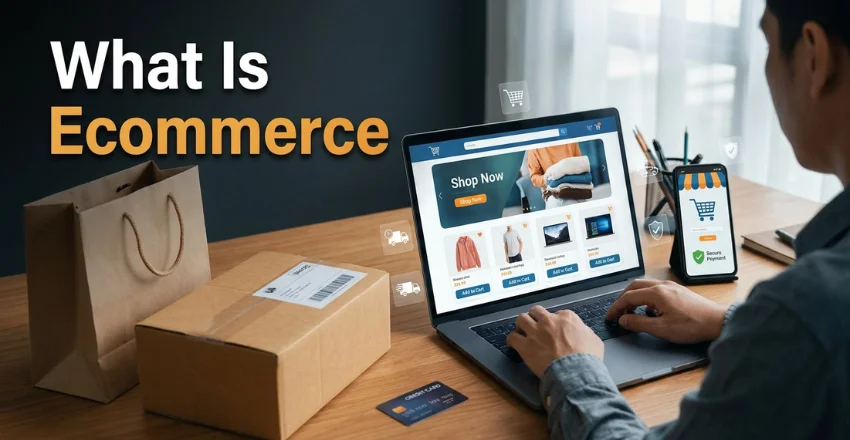
Online shopping has changed how Canadians buy products, book services, and pay businesses. What is ecommerce in practical terms? It is buying or selling goods and services through internet-based channels.
A transaction may happen on a company website, marketplace, mobile app, or social platform. The customer places an order digitally, while the seller processes payment and fulfils the purchase. Physical stores can also use online selling alongside their regular locations.
| Key point | What it means |
|---|---|
| Basic definition | Buying or selling goods and services through the internet |
| Common channels | Websites, marketplaces, mobile apps, and social platforms |
| Main models | B2C, B2B, C2C, and D2C |
| Typical process | Browse, order, pay, fulfil, deliver, and support |
| Canadian considerations | GST/HST, provincial taxes, payments, shipping, privacy, and cross-border rules |
| Common products | Physical goods, digital products, subscriptions, and services |
Direct answer: Ecommerce is the buying and selling of goods or services through online channels. A customer finds an offer, places an order, and pays digitally or through another accepted method. The seller then provides the product, service, download, subscription, or delivery.
Key Takeaways
- Online commerce covers products, services, subscriptions, and digital goods.
- A transaction can happen without the buyer visiting a physical location.
- Businesses can sell through their own website or third-party platforms.
- Canadian sellers must consider taxes, payment processing, shipping, and consumer expectations.
- Online selling can complement a physical business rather than replace it.
What Is Ecommerce in Plain English?
Statistics Canada generally defines electronic commerce by how an order is placed. The purchase commitment must be made online. Payment does not necessarily need to happen online.
That distinction matters because online commerce is broader than card payments. A customer might order through a website and pay later by another accepted method. The digital order defines the transaction.
Consider a Canadian clothing store with locations in Calgary and Edmonton. Customers can visit either shop or order clothing from its website. Those website orders form the store’s ecommerce channel.
How Does Online Selling Work?
Most online purchases follow a similar path, even when the technology differs. Several systems work together behind the storefront. Customers typically see only a few simple steps.
- A customer discovers a product or service. They may arrive through search, advertising, social media, email, or a marketplace.
- The customer reviews the offer. Product pages explain features, prices, availability, shipping, and return conditions.
- The customer places an order. A shopping cart or booking system records the selected products or services.
- Payment is processed. The business may accept credit cards, debit options, wallets, transfers, or other payment methods.
- The order is fulfilled. Physical goods are packed and shipped, while digital purchases may arrive immediately.
- The seller provides support. Confirmations, tracking, returns, refunds, and customer service complete the buying experience.
Inventory management also becomes important as product ranges grow. Unique product codes help sellers accurately track variations, stock levels, and fulfilment. Bizverra’s guide to SKU systems explains how these codes work.
The Main Types of Ecommerce Business Models
Online businesses are often grouped by who sells and who buys. These models affect pricing, marketing, order size, and customer expectations. A company can also operate more than one model.
| Model | Relationship | Example |
|---|---|---|
| B2C | Business to consumer | A retailer selling shoes directly to shoppers |
| B2B | Business to business | A supplier selling office equipment to companies |
| C2C | Consumer to consumer | Individuals selling used items through a marketplace |
| D2C | Direct to consumer | A manufacturer selling directly through its own store |
Business-to-Consumer
B2C is the model most people associate with online shopping. A company sells products or services directly to individual customers. Clothing, electronics, groceries, courses, and subscriptions can all fit this model.
Business-to-Business
B2B transactions take place between companies rather than individual consumers. Orders may involve wholesale quantities, negotiated prices, or recurring purchasing agreements. Software subscriptions and professional services also fit this category.
Consumer-to-Consumer
C2C platforms connect individuals who want to buy and sell from each other. The platform usually provides listings, communication tools, or payment features. Used-product marketplaces are familiar examples.
Direct-to-Consumer
D2C businesses sell directly to end customers without depending entirely on traditional retailers. Manufacturers and product brands often use this approach. The model gives companies more control over pricing and customer relationships.
What Are Common Ecommerce Examples?

A familiar example is ordering a laptop from an online electronics store. The buyer compares products, adds one to a cart, pays, and receives delivery. Every major part of the transaction happens through digital systems.
Digital products also qualify when the order is placed online. Examples include ebooks, software, online courses, paid templates, and subscriptions. No physical parcel needs to move between the buyer and seller.
Services can be sold online too. A consultant might accept bookings and payment through a website. A software company may sell recurring access through an automated checkout.
What Are the Benefits for Canadian Businesses?
Online selling can expand a business beyond the limits of a single physical location. A retailer in Halifax can accept orders from customers in Vancouver or Winnipeg. The company can also remain available outside normal store hours.
Digital storefronts also make performance easier to measure. Businesses can track traffic, sales, popular products, abandoned carts, and repeat purchases. These insights can support better merchandising and marketing decisions.
Operating online does not eliminate business costs. Sellers still need technology, payment processing, shipping, customer support, and marketing. Returns and fraud management can also create additional expenses.
What Canadian Businesses Need to Know About Taxes
Canadian sellers must understand when GST or HST registration becomes necessary. The Canada Revenue Agency generally requires registrants to collect applicable GST/HST on taxable Canadian supplies. Rules vary depending on the business and transaction.
Bizverra’s GST/HST registration guide explains the small-supplier threshold and registration process. Sellers operating across provinces should also understand which rate applies to customers. The Canadian sales-tax guide provides provincial and territorial rate information.
Tax settings should be reviewed before a store launches. Incorrect checkout settings can result in undercharging or overcharging customers. Business owners should seek professional tax advice when their circumstances are complex.
Payments Matter as Much as the Storefront
Customers expect a payment process that feels simple and familiar. Credit cards, debit options, and digital wallets are widely used in Canadian online transactions. Payment choices can affect both conversion rates and merchant costs.
Processing fees vary by provider, transaction type, and contract. Business owners should compare total costs rather than focus on a single advertised percentage. Merchants that also accept in-person sales can read Bizverra’s debit machine guide for context on terminal costs and payment options.
Security also deserves attention because businesses handle payment and customer information. Reputable processors use security controls designed for digital transactions. Sellers should keep their platforms and plugins up to date.
Ecommerce Versus Traditional Retail
Traditional retail depends heavily on customers visiting a physical business location. Online retail lets buyers shop through connected devices instead. Many successful businesses combine both approaches rather than choosing only one.
A physical store gives shoppers immediate access to products and staff. An online store provides broader geographic reach and longer shopping hours. Combining both can support pickup, delivery, and flexible customer journeys.
This mixed approach is often called omnichannel retail. Customers might research online before visiting a store. Others may inspect products in person and order them later.
What Do You Need to Start Selling Online?
A new seller doesn’t need every advanced feature on day one. The basic system should make finding, ordering, paying, and receiving products straightforward. Strong operations matter more than excessive features.
Most businesses need the following.
- A product or service people want.
- A website, marketplace account, or another selling channel.
- Clear product descriptions and pricing.
- A secure checkout or ordering system.
- Reliable payment processing.
- Inventory or service-capacity tracking.
- Shipping or delivery arrangements.
- Clear return and refund policies.
- Customer support.
- A plan to attract visitors.
Start with a manageable offer and document how each order moves through the business. Fix bottlenecks before adding more products or sales channels. That approach makes growth easier to manage.
Is Ecommerce Worth Considering in Canada?
Canada has an established online retail market, and digital purchasing remains an important part of consumer behaviour. Businesses use websites, marketplaces, mobile channels, and hybrid retail models to reach customers. Online sales can therefore become either a primary channel or an extension of an existing company.
The right approach depends on margins, customer demand, delivery requirements, and competition. A profitable physical business does not need to abandon its existing model. It can add online ordering where that channel improves convenience or reach.
Canadian businesses should focus on fundamentals before adopting newer technology. Clear offers, accurate inventory, sensible pricing, reliable fulfilment, and good service remain essential. Technology works best when those basics already function well.
Frequently Asked Questions
What is ecommerce and how does it work?
Ecommerce means buying or selling goods and services through internet-based channels. Customers browse an offer, place an order, and complete the required payment process. The seller then delivers the product, download, subscription, or service.
Does ecommerce only mean selling physical products?
No, online selling includes much more than physical merchandise. Businesses can sell software, courses, subscriptions, professional services, downloads, and bookings. The order process matters more than whether the final product is physical.
Do Canadian online businesses need to charge GST or HST?
Not every new seller must register immediately. CRA registration requirements depend on taxable supplies, revenue, and specific business circumstances. Sellers should check current CRA rules before configuring checkout taxes.
Can a physical store also sell online?
Yes, a company can operate physical and digital sales channels together. Customers might order online for delivery, pickup, or later collection. This arrangement can extend reach without closing existing locations.
What is the difference between ecommerce and digital marketing?
Online commerce handles transactions, ordering, payment, and fulfilment. Digital marketing attracts and communicates with potential customers through search, social media, advertising, and email. Marketing can support sales, but the two activities are not the same.
The Next Step
Understanding online commerce is easier when you view it as a complete buying system. Your website is only one part of that system. Payments, inventory, taxes, fulfilment, and customer service determine whether the channel works reliably.
If you plan to sell online in Canada, begin by mapping one complete customer order. Identify how customers will find you, pay, receive purchases, and request support. Then build the technology around that process instead of adding features without a clear purpose.
—–